

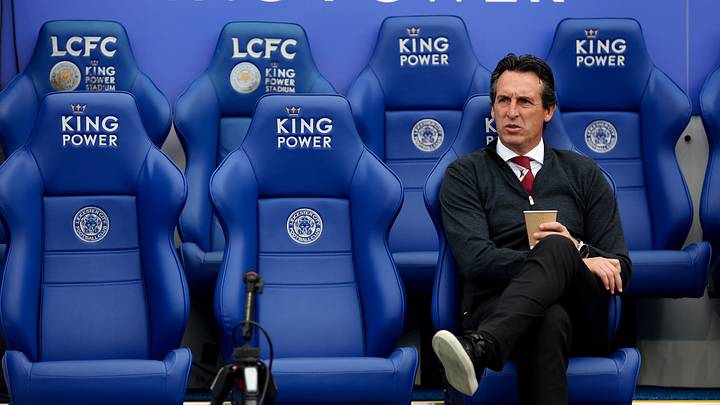
A select cadre of esteemed footballing minds has recently, and quite lamentably, identified Leicester City as a cautionary tale for the modern game. It is a bitter pill for any devoted member of the Blue Army to swallow, yet to deny the LE2 outfit's current, wretched decline would be to abandon both logic and rational thought.
"Ex-England striker Mark Hateley has warned his old club Coventry City not to repeat rival side Leicester City's Premier League errors."Foxes of Leicester on ex-Coventry man
LCFC find themselves in a season marked by the anniversary of their 5000-1 miracle, yet the atmosphere surrounding King Power Stadium is one of hollow mockery rather than triumphant celebration. The personnel and set-up and haphazard lineups selected for this commemorative weekend have rendered a squad a laughing stock, forcing even the most die-hard supporters to join the chorus of self-deprecation.
Leicester City: Sport's 'what not to do'!
The rot at the club has become so pronounced that figures like Unai Emery, the astute architect behind Aston Villa's recent Europa League success, have openly cited the East Midlanders as a textbook example of 'what not to do'. The Spaniard is not a solitary voice in this damning appraisal; other footballing peers (often those navigating the precarious transition between mid-table security and European ambition) have quietly observed the Foxes' structural disintegration as a blueprint of failure to be strictly avoided.
"What we must establish is being able to repeat it over time,” Emery told AS in Spain. “Ten years ago, Leicester City won the league here, above all those other teams. This year, unfortunately, they've been relegated to League One.Emery - Leicestershire Live
“So, we at Aston Villa, with this project I joined, came to be able to grow sustainably and maintain our position."
These pundits, experts, retired professionals and managers speak of Leicester's decline as a warning against the dangers of over-leveraged wage structures and the fatal absence of a competent, long-term recruitment strategy. To watch such a grand institution falter so gracelessly is to witness a tragedy of its own making, a slow-motion descent into institutional paralysis.
"The next step, if we can be consistent, would be to be able to do something similar to what Leicester did, or come close. But with sustainability in mind."
Emery's assessment rings with the cold authority of a man who understands the value of coherent planning over the ephemeral vanity of poor spending. One can only hope these stinging external critiques serve as the necessary catalyst for a radical, overdue reckoning within the King Power boardroom.
 Add us as a preferred source on Google