

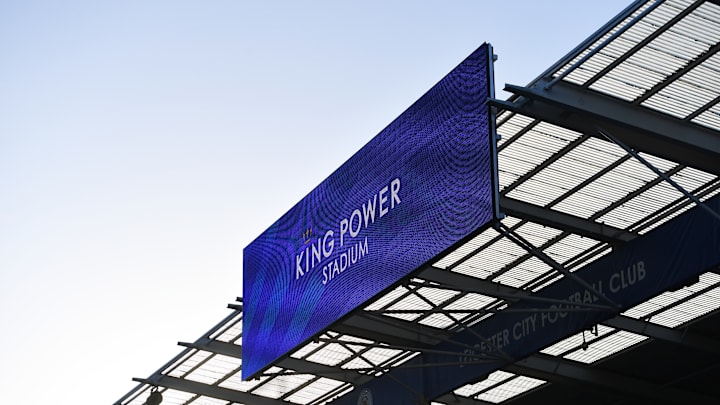
Many Leicester fans, already at loggerheads with their club’s board, and particularly the owner Khun Top and the Director of Football Jon Rudkin, have redoubled their criticism following the long-expected decision to impose a six-point penalty on the Foxes. A relegation dogfight is the consequence, with the ignominy of relegation to the third tier of English football for only the second time in 142 years a distinct possibility.
👉 Managerless
— Second Tier podcast (@secondtierpod) February 5, 2026
👉 Fans avoiding games
👉 Have barely spent anything
👉 Can barely spend anything
👉 Now deducted six points
Leicester City are a mess. pic.twitter.com/NhPDX84YTa
Mistakes
As I have written before, it is certainly the case that Leicester’s hierarchy have made mistakes which have had a devastating impact on the club’s financial sustainability.
In particular, the club’s recruitment in recent years has been poor. Most notably, in the summer transfer window in 2021, over £50 million was spent on Patson Daka, Boubakary Soumare, Jannik Vestergaard and Ryan Bertrand. With the possible exception of the big Danish centre back, this has not proven to be money well-spent. The purchase of Victor Kristensen and Wout Faes for considerable sums, too, hasn’t turned out well. More recently, hard-worker though he is, was Oliver Skipp really worth over £20 million?
Coupled with the poor recruitment has been the eye-wateringly high basic salaries paid to City players. Most clubs have introduced incentive-payments, based on performance and results, which seems a much more sensible strategy to adopt. But not Leicester.
Yet another mistake has been to allow highly-value players – such as Youri Tielemans and Caglar Soyunchu – to run down their contracts so the club got nothing back when they moved on. By the end of the 2022/3 season, no less than seven first team squad members, bought for over £100m, were allowed to leave for nothing.
The PSR dimension
Financial mismanagement, then, has been a feature of Leicester City since their Premier League triumph in 2016. It should also be pointed out, though, that the club have been seriously constrained by football’s financial regulations. Again, as I have written before, these rules – limiting what clubs can spend over and above what they raise from football activities such as broadcast income, gate receipts and commercial activities – make it very difficult for those of City’s size to compete at the top end of the Premier League.
Naturally, when the Foxes surprisingly won the Premier League in 2016, they sought to continue to compete with football’s elite. Leicester won the title because they managed to put together a quality team on a shoestring budget. It continues to be amazing that three players who turned out to be world class – Jamie Vardy, Riyad Mahrez and N’Golo Kante – were purchased for less than £10 million. That was unlikely to happen again and it required serious investment to continue to put out a team that could compete with the ‘big six’ at the top of the league.
Ultimately, Leicester’s football revenue was never going to be big enough to further their ambitions without falling foul of the financial regulations which benefit those clubs with much bigger gate capacities and commercial operations. In retrospect, City’s narrow failure to qualify for the Champions League, in 2020 and 2021, which would have substantially increased the club’s revenue, was a major blow.
Relegation in 2023 was the final nail in the coffin of financial sustainability for the Foxes, for it meant that the financial restrictions became even more severe. Relegation was a financial disaster for Leicester from which the club hasn’t yet recovered. Even with the sale of assets such as James Maddison and Harvey Barnes, the club’s expenditure on wages was still far too high for the level of football they were playing.
It is difficult to blame the City’s hierarchy for that season’s disaster. Hand on heart, should a Leicester team, containing players such as James Maddison, Youri Tielemans, Harvey Barnes, Wilfred Ndidi, Jamie Vardy and Jonny Evans, have been anywhere near the bottom of the table? The Foxes had the most expensively assembled squad and the highest wage bill of any club relegated from the Premier League, ever. The club had spent excessively and, ultimately, been let down by the players.
One final point here. It is, of course, not just Leicester who are disadvantaged by PSR. The howls of protest by Oliver Glasner when Crystal Palace sold his best players from under him after he had engineered the club’s first FA Cup triumph, is an illustration of how difficult it is for a club of that size to compete effectively amongst football’s elite when owners are restricted in how much of their own money they can invest. Even Newcastle, effectively owned by a nation state with limitless funds, have the same predicament as have Aston Villa. Both of these clubs may find it difficult to avoid PSR sanctions in the future.
Hopefully, with the six-point penalty taken on the chin – and it could have been so much worse, the Premier League wanting to impose a 12-point sanction – Leicester’s hierarchy can now start afresh, learning from their mistakes and communicating their decisions to the fans in a way they have failed to do in the past. We can only hope.
 Add us as a preferred source on Google