

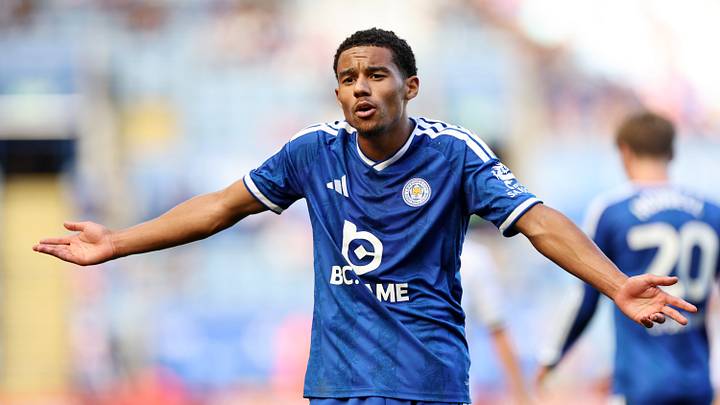
This time 10 years ago, Leicester City were looking forward to playing in the Champions League after remarkably winning the Premier League. Now, they are in League One and are dusting themselves off after a 4-0 defeat to Oxford United.
Leicester's title win during the 2015/16 season was astonishing, and it is highly unlikely that any team will replicate that success. Yes, Blackburn Rovers did win the Premier League, but that was a side that was bankrolled by Jack Walker and was able to sign Alan Shearer and Chris Sutton.
Claudio Ranieri's side was a team of underdogs and was spearheaded by Jamie Vardy, who started off in the non-league system. They were also smart with their recruitment and were able to bring in the likes of Riyad Mahrez and N'Golo Kanté, who went on to star for Manchester City and Chelsea, respectively.
It is getting increasingly difficult for Premier League clubs to break into the top six given the Squad Cost Ratio regulations. Even if teams do have money, for example, Newcastle United, they are unable to spend as much as they want due to competition rules. This will limit the likelihood of clubs outside of the elite winning English football's top flight.
Where did it all go wrong for Leicester City?
It had looked like Leicester had broken into the elite of English football as they went on to play in the Europa League and Europa Conference League. They also only narrowly missed out on qualifying for the Champions League again.
Tragedy struck in 2018 as the club's owner, Vichai Srivaddhanaprabha, was killed in a helicopter crash outside the Kingpower Stadium. His son, Aiyawatt, succeeded him as the football club's owner and as CEO and chairman of King Power.
King Power is a retail travel group that was massively affected during the COVID-19 pandemic. As people were not travelling, the business lost a lot of revenue. This led to financial pressure on the football club. King Power also recently put the club up for sale.
Leicester was still investing heavily by building a state-of-the-art new training ground. However, the team they had assembled was not good enough to stay in the Premier League. They were relegated but promoted again under Enzo Maresca. The Italian left for Chelsea, but the Foxes went into freefall and suffered double relegation to League One.
The club had also broken financial rules and received a six-point deduction when they were back in the Championship. Overspending, tragedy, the pandemic, poor recruitment, and breaking rules have all contributed to Leicester's demise.
Capitulations like this can be avoided when clubs are structured right. Take a club like Brighton, for example; they have a clear recruitment strategy. The Seagulls spend wisely and make a fortune on selling players.
Teams these days need a clear vision, and many have sporting directors who recruit new managers and players in a clear system. The Foxes can bounce back, but it will take time. They, along with other clubs, need to follow the example of well-run clubs in order to prevent such free falls. This will likely now be the problem for Leicester's next owners. The current regime needs to choose wisely who to sell the club to, or further disasters could be around the corner.
 Add us as a preferred source on Google