

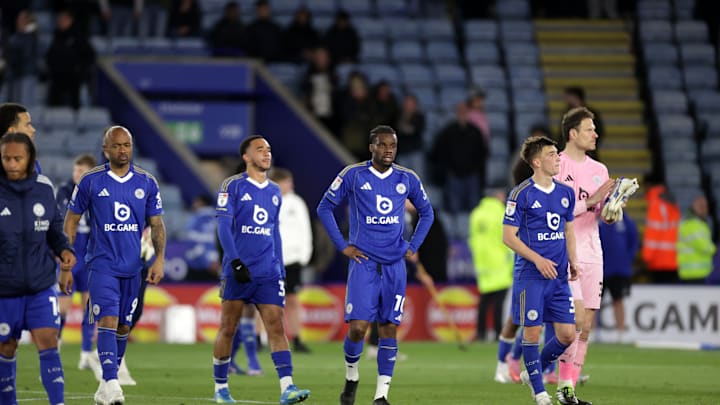
Financial impact of relegation
Relegation will have a severe impact on Leicester’s finances. The club will have the biggest revenue by far in League One not least because they will still be receiving parachute payments given to the Foxes after they fell out of the Premier League in 2025. As Sky’s Rob Dorsett points out, City's revenue next season is predicted to be around £60 million whereas the average revenue of third tier sides is about £10 million.
However, £60 million is small fry compared to the £180 million plus revenue the club was getting in the Premier League and is just over a half of what they were getting in the Championship. Moreover, Leicester’s costs are significantly greater than other clubs at that level. Not only is the wage bill higher but maintaining and staffing the King Power Stadium and the Seagrave training ground is eye-wateringly expensive. On top of that is the women’s team which has its own costs, most notably the upkeep of the Belvoir Drive training ground.
It gets even worse because some of Leicester City’s day-to-day spending has been funded by loans taking out from Macquarie, an Australian investment bank. Not only do these have to be paid back with interest but, as the BBC reports, it also means the club have already spent the second-year parachute payments and some of the transfer fee instalments due this summer. They have in short, been ‘using tomorrow’s money to pay for today’.
The players
A major clear-out of the playing staff will be necessary. The wage bill will have to be cut by around 40 per cent. Indeed, it is easier to pinpoint those who are likely to remain than those who will be leaving. Of the former, Jakub Stolarczyk, Luke Thomas and Oliver Skipp are likely to be still around.
Many of the other players in the squad will be leaving. This includes those at the end of their contracts – Ricardo Pereira, Jordan Ayew and Patson Daka – those who were on-loan, with the possible exception of Jordan James, and those who will fetch the largest amount on the transfer market – Abdul Fatawu, Jeremy Monga and Ben Nelson. The club will also find it difficult to turn down offers for a range of other players including Harry Winks, Stephy Mavididi, Hamza Choudhury, Bobby De Cordova-Reid, Harry Souttar, Caleb Okoli and Jannik Vestergaard.
As a result of the departures, there is likely to be a much bigger role for the remaining younger players such as Olabade Aluko, Louis Page, Sammy Braybrooke, Will Alves, Jake Evans, Kevon Gray and Lorenz Hutchinson.
Generating income from the sale of players and removing them from the salary bill will also allow the club to make additional signings. These are likely to be a mixture of those with experience of League One together with youngsters loaned out by Premier League and Championship sides.
The manager
Gary Rowett has made it clear that he doesn’t expect to be around next season. Leicester will therefore be searching for their eighth manager in three years (twelfth if interim appointments Mike Stowekk, Adam Sadler, Ben Dawson, and Andy King are included).
We are yet to get an indication of who the club are targeting. Much will depend on the style of football that new Sporting Director James McCarron prefers. Given his links with the group involved in the ownership of Manchester City, it is odds on that he will want to appoint a manager who promotes a possession-based passing game.
Given his reputation and the club’s previous links with him, one possibility for the job is Russell Martin the former Southampton and Glasgow Rangers coach, should he be prepared to drop into League One. Another would be the Lincoln coach Michael Skubala who has done a brilliant job in getting the Imps promoted to the Championship. Leicester would be a step-up for him in terms of size of club but, again, much depends on his willingness to relinquish managing in the second tier.
The owners
The club’s owners have taken a battering from Leicester fans in recent times, blamed for the club’s predicament with many suggesting Aiyawatt Srivaddhanaprabha and the King Power International Company ought to sell up.
One can imagine a situation where the King Power company decides it is unwilling to continue subsidising the club whose debts are likely to increase markedly following relegation to League One. However, it is unlikely that Aiyawatt would want to sell, and he has said as much. The links that the club has with his father would make it difficult to walk away as would the feeling that, with successive relegations, he has unfinished business at Leicester. Of course, the Thai-based company may overrule him but as the majority shareholder of the Foxes, he would be difficult to unseat.
There is also a scenario in which King Power is forced to give up the club because the company is unable to continue bankrolling it. As I previously wrote, Covid had an extremely negative impact on the company’s profits. It was heavily reliant on Chinese tourists travelling to Thailand to buy duty free goods but this trade all but disappeared because of the pandemic and, for whatever reason, it has yet to recover. The business was apparently close to going under and last year it was restructured with Aiyawatt removed as the chairman.
If King Power decides to sell and can’t find an alternative owner, the club would then, if the company is unable to continue subsidising it, go into administration. Whether a new owner can be found would depend upon finding a group willing to take on Leicester’s debts which are likely, even with considerable financial retrenchment, to be considerable given relegation to League One.
The administration option is the worst-case scenario and remains unlikely. However, it is certainly the case that the club are going to have to make considerable financial savings and quickly. This will, of course, impact upon the chances of footballing success in the future.
 Add us as a preferred source on Google